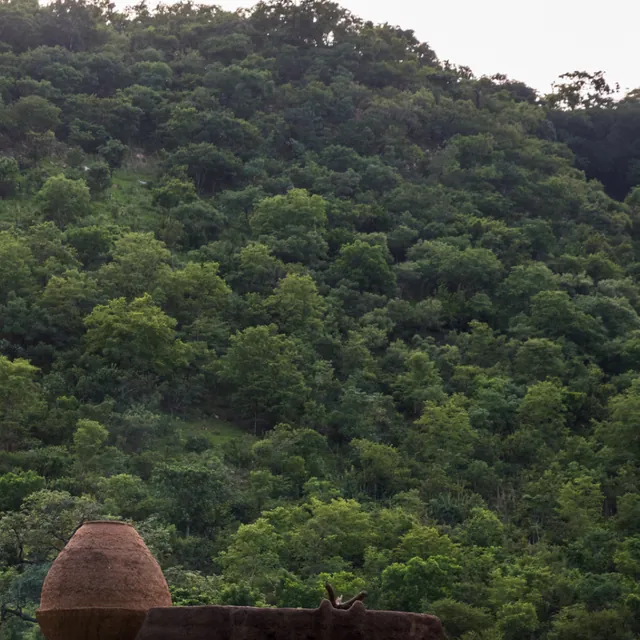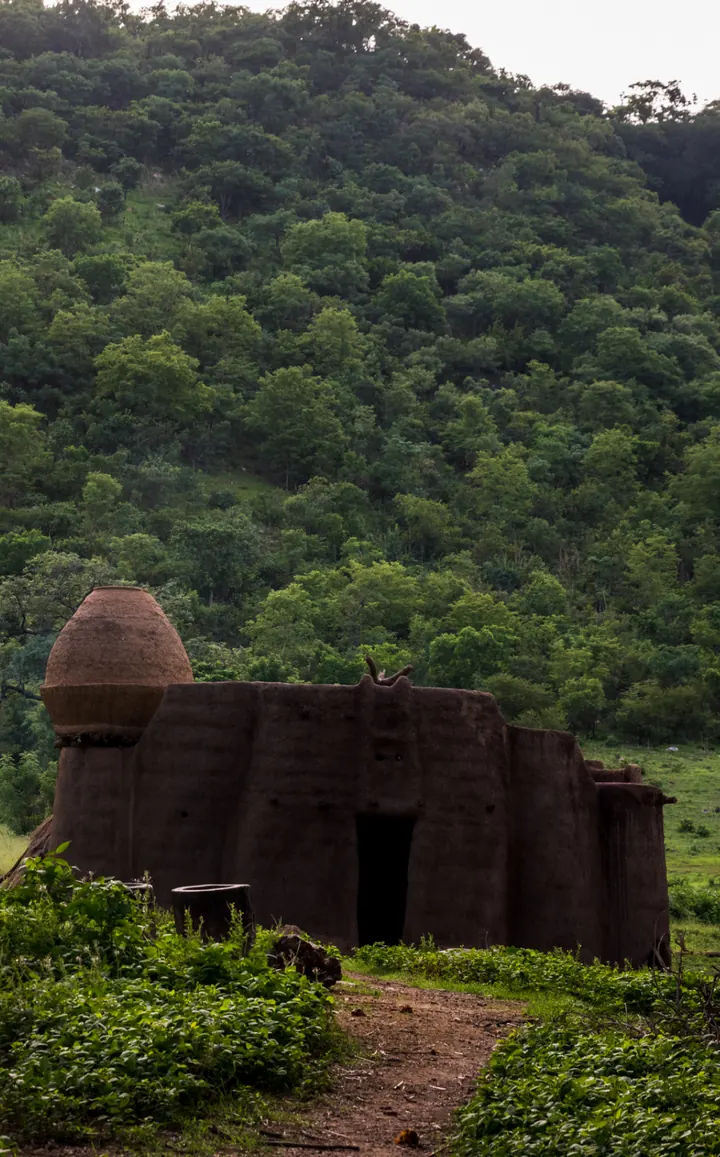
Tamberma country Togo · 8 min
Northern Togo: Kara and Tamberma country
After hours of flatland the road starts to climb and Togo changes register. Kara opens up the north; the Koutammakou valley next door holds the most startling earth houses in West Africa — and people live in them.
The road climbs, and the country changes
You set off from the south and, for a long while, nothing spectacular happens. Flatland. Villages strung out along the tarmac. Hands holding up bread and water sachets at window height whenever the vehicle slows. It is a long road, and that is exactly right: it gives the journey time to begin.
Then the road starts to climb. You see the change before you can name it: the vegetation draws in on itself, the earth turns red, high ground lifts on one side and then the other. Rocky peaks appear, valleys open all at once, and wooded hills close in behind you. By the time you reach Kara the air is drier than in the south and the evenings are noticeably cooler. It is no longer the same country you left, and you watched it change through the window.
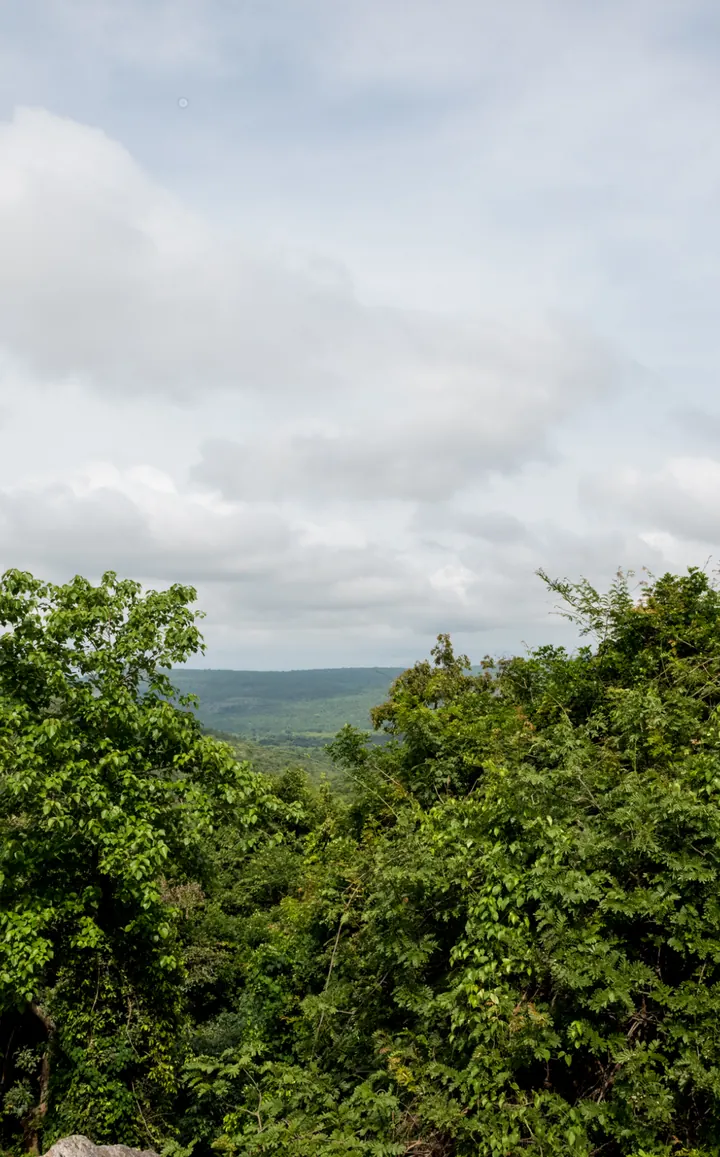
Kara, the base camp
Kara is the gateway to northern Togo, and we use it as one. You sleep there, you breathe, and it is from there that you reach Tamberma country. The town’s best moment happens early: you climb to the heights at daybreak, while mist still sits in the hollows and pulls back in patches as the sun warms up. An hour later everything is sharp and the light is already hard.
The market
You come back down for the market, one of the liveliest in the country. It is not a craft market laid on for travellers: it is where the town and the villages around it stock up. You move slowly, pushed from one aisle to the next, and stop wherever the noise changes. At the potters’ stalls, rows are set straight on the ground and you hear clay being smoothed by hand. At the blacksmiths’, the hammer sets the tempo for the whole row.
The market does not beat at the same rhythm every day of the week. Rather than print a day that may well have shifted by the time you travel, Tony sets the day around the actual rhythm at the time. That is the kind of detail you check on the ground, not in an article.
Two days in Kara is enough, and here is what they are for:
- Climb to the heights at daybreak, before the mist leaves the hollows
- Walk the big market with no shopping list, stopping wherever work is happening
- Watch the blacksmiths and potters at work, and ask questions
- Sleep in the cool, and leave for the valley rested rather than straight off a long drive
The Koutammakou, or what people call Tamberma country
The names are worth pausing on, because there are three of them and they do not mean the same thing. The Koutammakou is the land: a valley in north-eastern Togo, inscribed on the UNESCO World Heritage list. The Batammariba are the people who live there, and that is what they call themselves. The takienta is the house. The term you will see written most often, "tata somba", comes from outside: it is the name given by others. We use it because it is the one a traveller recognises, and we set it aside as soon as we arrive.
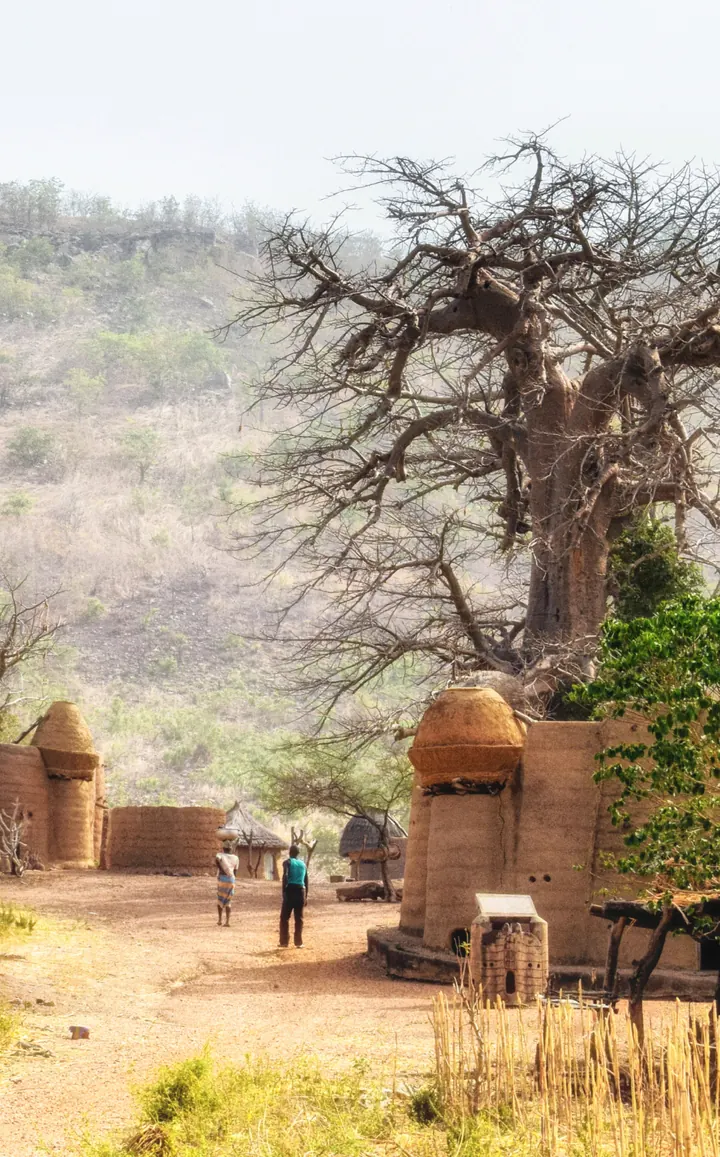
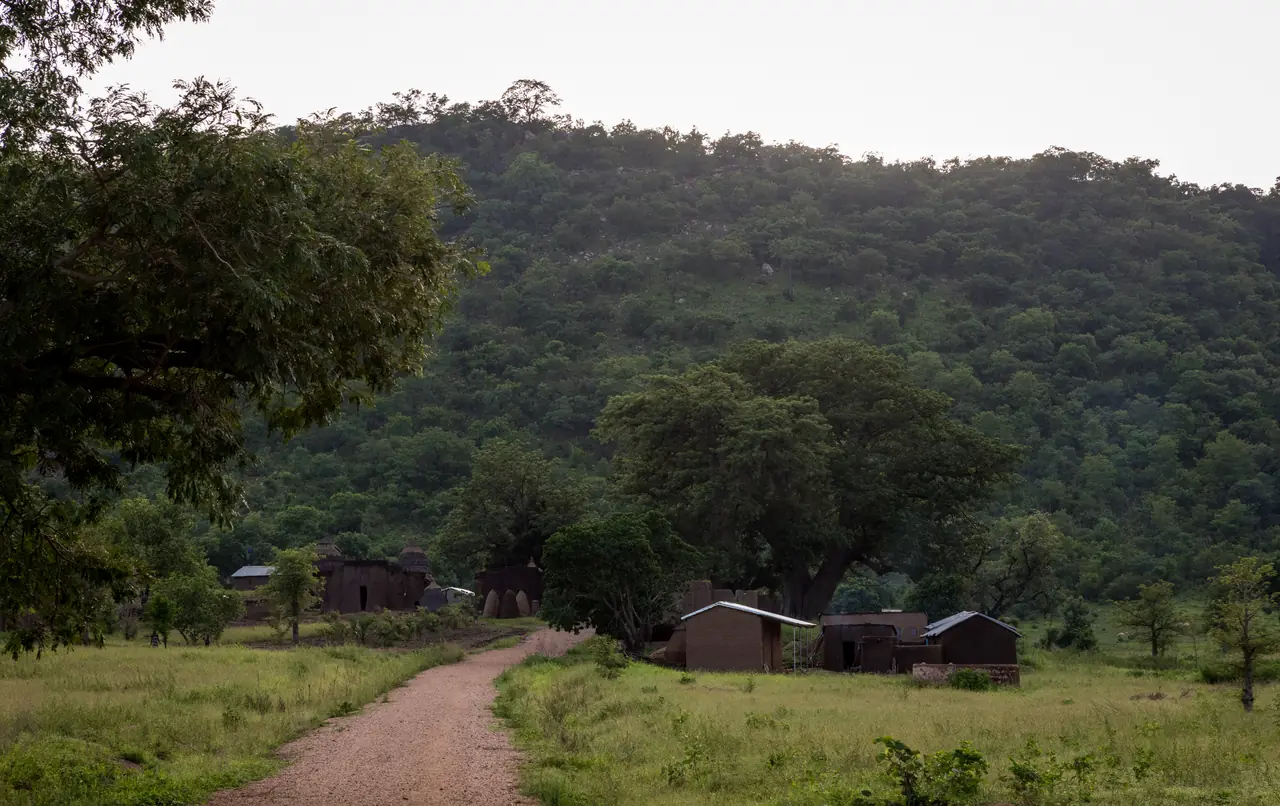
There is no village to visit, in the usual sense. No central square, no main street, no ticket booth at the entrance to a site. The houses are scattered across the valley, each in the middle of its own fields, within calling distance of the next and no closer. You drive, you walk, and they appear one at a time on the red earth — first one, then four, then a whole valley lining up towards the hills.
How to read a takienta
A tata reads from the ground up, like a three-level building where each level has one clear job. Once you have grasped that, you stop seeing the valley the same way: they are no longer shapes, they are houses whose every part you can account for.
Below: livestock and fire
The ground floor houses the livestock and the kitchen. You come in through a low opening, and it takes a few seconds for your eyes to adjust: inside it is dark and cool, the thick earth keeps the heat out, and the air smells of smoke and animals. The stock is under cover at night. The fire is where life happens.
In between: a ladder cut from a single trunk
There is no staircase to get up. There is a trunk with steps cut into it, stood against the wall, polished smooth by the family’s feet. You climb feeling for your footing, one palm flat against the warm earth, and come out into the light. That narrow passage is not a design flaw: a house you climb one at a time is a house one person can hold against several.
Above: the terrace and the granaries
The terrace is the house’s floor. It is where grain is dried, where people sit at the end of the day, and where they sleep in the warm season. The granaries stand on it like small towers under straw hats — grain is kept high, out of reach of animals and damp. You climb up at sunset, when the shadows of the turrets stretch across the red earth and the valley unrolls in aligned tatas up to the hills. It is probably the image you will keep longest.
Why the turrets
It is the question everyone asks, and the answer is plain: nothing about it is decorative. The turrets were defensive. This was a country where a family had to be able to hold its own ground, alone, with no perimeter wall and no immediate neighbours. The low entrance, the single ladder, the wall thickness, the height of the granaries: each element solves a concrete problem, and the beauty of the whole is a consequence, not an intention.
The rest — which way the entrance faces, what is placed where, what is passed down and what is not spoken — follows precise rules we will not set out here. It is not our knowledge to give. It is explained to you where it was invented, by the people who live in it, and you will find that how it is told matters as much as what is told. The house is also a place of worship: ancestors are honoured there. That alone explains why some questions get an answer and others get a smile.
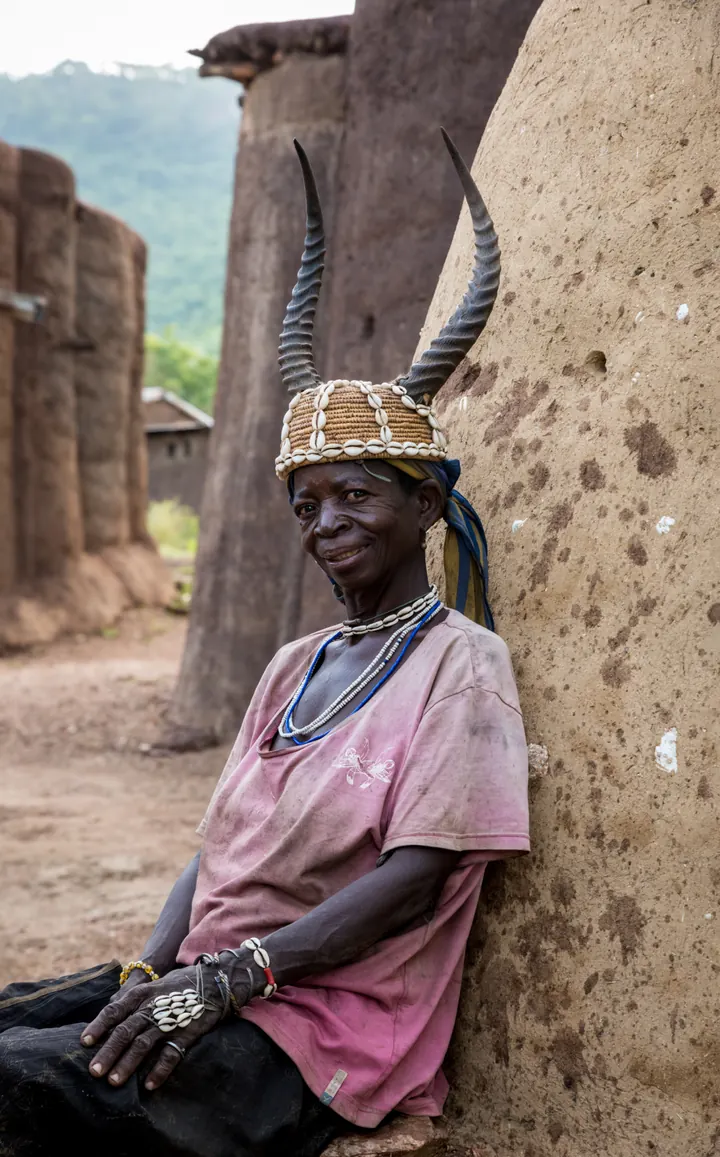
These are lived-in houses
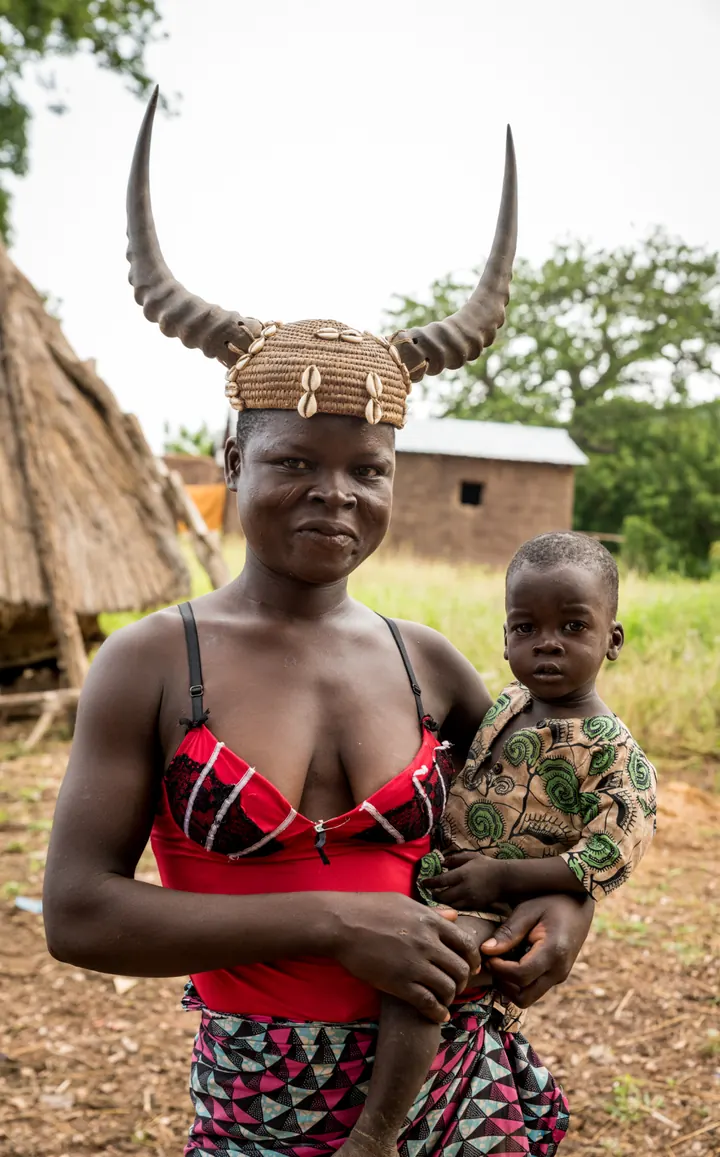
This needs saying plainly, because it is the whole point of the visit. A takienta is not a monument, a reconstruction or a set. It is a family’s home: the livestock sleep below, meals are cooked inside, the children go up the ladder several times a day. You do not go in because you travelled a long way to get there. You go in because you were invited.
This is where being introduced changes everything. Tony knows the families who host, he asks, he translates, and he tells you plainly when the answer is no. A visit done properly looks less like a tour than an afternoon: you sit, you talk, you climb, you come down, you share the evening meal with the family hosting you. You leave when the conversation stops, not when the list is finished.
When to go
November to March. That is the dry season: good roads, tracks to the tatas that stay passable, bearable heat and superb light. The heavy rains run roughly from April to July and return in September–October. You can travel then, and the valley is spectacularly green — but some northern tracks become difficult, and an itinerary that depends on a track becomes a fragile itinerary.
The north is also more comfortable in the dry season for a less-mentioned reason: the evenings are cool. After days above thirty degrees in the south, you find yourself looking for a jumper on the terrace. Bring long sleeves, closed shoes that can take red dust, and cash: everything here is settled in CFA francs, in notes, and a bank card is next to useless.
Kara and Tamberma country within a trip
One honest clarification: our signature fourteen-day journey stays in Benin, from Cotonou to Grand-Popo. Northern Togo is built separately, to measure, around your dates and the time you have. Allow two days in Kara, then one or two in the valley: that is what lets you arrive rested, stay long enough to be received, and leave without having rushed.
Tell us what you want to see and how long you have. We answer with a written itinerary, saying what is realistic and what is not — and Tony stays reachable before, during and after the trip.
Frequently asked questions
The Koutammakou is the land, that valley in north-eastern Togo inscribed on the UNESCO World Heritage list. The Batammariba are the people who live there. The takienta is the house. "Tata somba" is the name that came from outside and the one guidebooks use: we use it to be understood, without pretending it is the right word.
Two days in Kara and one or two in the valley. Less than that gives you a round trip: you see the houses and meet nobody. The difference lies in how much time you allow an afternoon to settle.
Yes, when the family agrees, and it is the heart of the visit. You come in through the low opening, climb the ladder cut from a trunk, and come out on the terrace. You ask at each stage — and if the answer is no that day, you do not push.
We do not promise it, because it is not ours to promise: these are lived-in homes and the decision belongs to the family. What we do arrange is the evening meal shared there. Tell us what you are hoping for and we will tell you what is possible, without dressing up the answer.
No. The signature fourteen-day journey takes place in Benin. Kara and the Koutammakou are in Togo and are arranged to measure, on their own or as an extension, depending on the time you have.
Next step
Ready to actually go?
Tony builds the itinerary around whatever made you want to go. Just tell him what stayed with you from this article.
Answer within 24h · No commitment