The principle: light, soft, washable
A two-week trip across Benin and Togo means five stages, five places to sleep, and a vehicle loaded and unloaded every other day. Every kilo costs you in handling, and every hard shell costs you space in the boot. A soft bag wins every time: it compresses, it slides in, it fits where a rigid case will not.
The second principle is even simpler: everything you bring should wash by hand and dry overnight. On the road, laundry happens in a sink, and thick cotton takes two days to dry. Thin fabrics and light blends are your friends — not because they are technical, but because they are dry by morning.
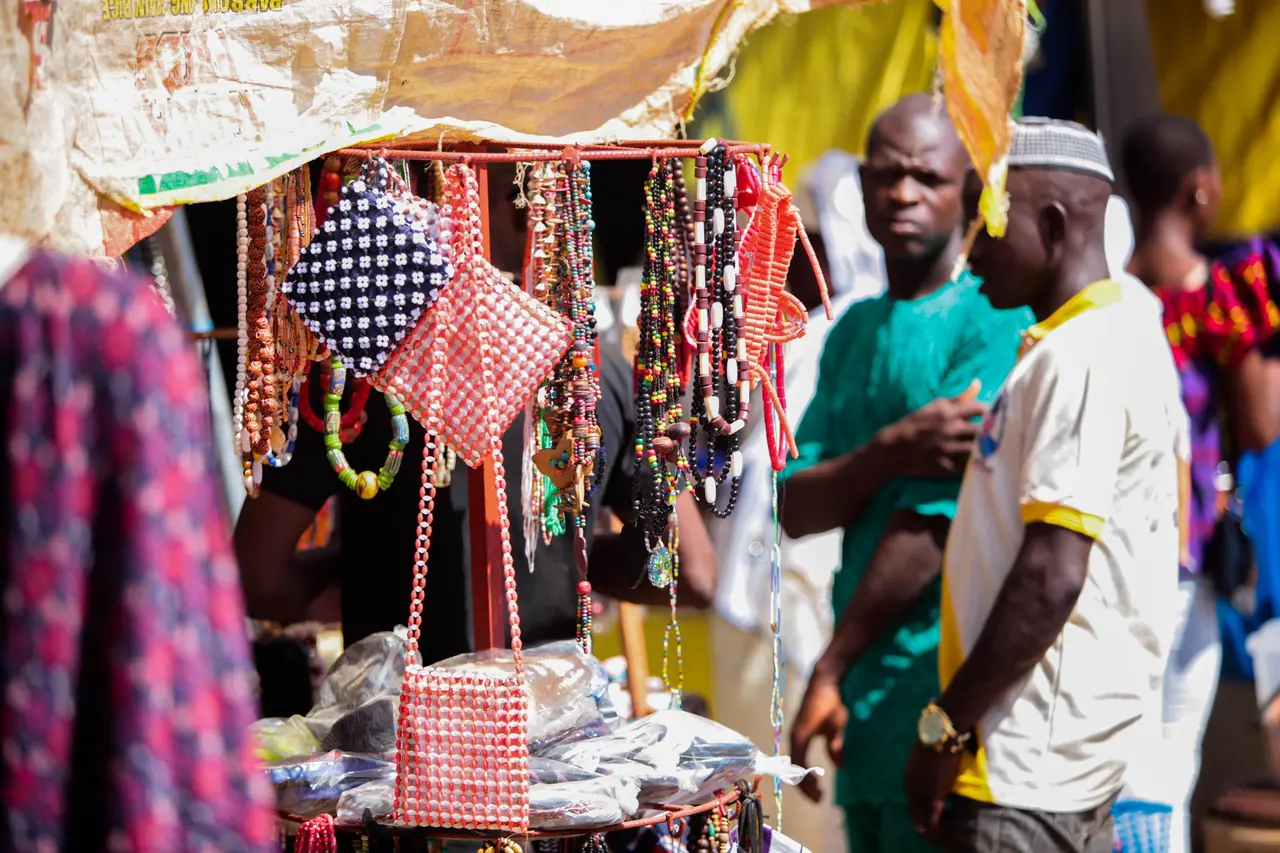
And the third: bring less than you think. Almost every traveller comes home with clothes that never left the bag. Five tops and three bottoms cover fourteen days if you wash as you go, and you will likely leave with fabric bought locally — Benin’s markets are full of it, and it is often the finest souvenir of the trip.
Clothes: covering without being hot
This is the apparent contradiction of travelling in West Africa, and it resolves easily. It is hot, but the itinerary includes temples, convents, ceremonies and visits to family homes: covered shoulders and covered knees are the norm, for women and men alike. A loose long-sleeved shirt is more comfortable than a vest in full sun, and it saves you from wondering whether you are dressed appropriately when you arrive somewhere.
- Four or five light tops, at least two long-sleeved. Linen, thin cotton and light blends dry fast and crease without it showing.
- Two or three bottoms that cover the knee: soft trousers, a long skirt, or lightweight canvas trousers. Short shorts read badly away from beaches and hotels.
- One slightly smarter outfit. There will be a dinner, a meeting or a ceremony where you will be glad not to be in road clothes.
- A scarf or shawl. It covers your shoulders in a second, shields your neck from the sun, and doubles as a pillow in the vehicle.
- One light layer for evenings and drives. Night falls quickly, and air-conditioned vehicles catch you out in a T-shirt.
- A swimsuit, if your itinerary reaches the coast or a place with a pool.
On colours, a practical note rather than a rule: laterite dust settles on everything, and it is red. Pristine whites do not stay that way past the second day on a dirt road. Mid-tones and patterns forgive a great deal.
Shoes: two pairs, no more
This is where travellers most often get it wrong. Two pairs are enough, but they need to be well chosen. The first is a closed, flexible shoe already broken in: it carries you through walks in Tamberma country, where the ground is uneven, and through days on foot in town. The second is a sandal or anything you can slip off in one motion — and that is where the real criterion lies.
If you travel during the heavy rains — April to July, or September and October — add a pair you do not mind getting wet, and accept that it will be. Tracks soak through, courtyards turn to puddles, and a shoe that dries beats a shoe that repels.
Documents, money, copies
Entry formalities for Benin and Togo, like health requirements, depend on your nationality and change regularly. We do not reproduce them here: we confirm them to you in writing with your quote, current as of your departure, and you must in any case check with the relevant authorities in your own country. What follows is about logistics only.
- Your passport, plus a digital copy in your email and a paper photocopy kept somewhere other than with the passport itself.
- Recent passport photographs. They come up more often than you would think, and getting them locally costs you half a day.
- Your travel insurance certificate, on paper and in digital form.
- Cash in small denominations, split between two places. Many day-to-day payments — a photography fee, a tip, a market purchase — happen in cash and in small amounts.
- Your guide’s WhatsApp number saved before you leave, with the conversation pinned.
Power and photography
A charged power bank is the single most useful object in the bag. Days are long, your phone doubles as camera, map and messenger, and you will not always be near a socket between breakfast and the evening return. Bring two cables rather than one: they always fail at the wrong moment.
On photography, the rule of the trip fits in one sentence: ask before you shoot. That applies to people, to temples, to ceremonies. Some sites charge a photography fee, payable in cash. A refusal is respected without argument — and a discreet camera held low earns far more than a phone held high.
The kit: comfort, not a pharmacy
Anything touching vaccines, medication or malaria prevention belongs to a doctor or a travel health clinic, to be consulted several weeks before departure. We give no medical advice, and you should be wary of any travel site that does. What we can list are the comfort items travellers regret leaving behind.
- High-factor sun protection and a wide-brimmed hat. Dry-season sun is direct from morning to evening.
- Insect repellent. Evenings are frequently spent outdoors.
- Hand sanitiser and a small bar of soap. Not every washing point is equipped.
- Your own prescription medication in sufficient quantity, in its original packaging with the prescription.
- A reusable bottle. Bottled water is provided on the road, but a flask saves you accumulating plastic and refills anywhere.
- Earplugs. Nights in town are lively, and village roosters do not wait for sunrise.
What to leave at home
The hard-shell wheeled case, first: it does not roll on the sand of Ouidah or on northern tracks, and it takes up the boot space of two soft bags. Valuable jewellery next, which serves no purpose on the road and adds needless worry. And the drone, whose use is regulated and often requires authorisation: do not bring one without checking, and without raising it with us beforehand.
One last point, less material. Many travellers bring gifts to hand out to children. The intention is good, the outcome rarely is: it sets up a relationship of asking where the trip is looking for precisely the opposite. If you want to leave something behind, raise it with your guide before departure. They will tell you what genuinely helps, and who to give it to.
In the end, the ideal bag for Benin and Togo is a soft one that a single person can carry without strain. Everything beyond that threshold is weight you will move around for fourteen days without ever opening it.
Frequently asked questions
A soft bag one person can carry unaided is more than enough. The trip has five stages and the vehicle is loaded every other day: beyond that threshold, weight costs you in handling. Your airline baggage allowance is a separate matter, to be checked with the carrier.
Shoulders and knees covered, for women and men alike. You also take your shoes off to enter many places: bring footwear you can slip off in one motion. Your guide warns you each time before you arrive.
Yes, by hand, in a sink. That is why we suggest thin fabrics that dry overnight: five tops and three bottoms then cover fourteen days. Some places offer a laundry service, depending on the stage.
See a doctor or a travel health clinic several weeks before departure: requirements depend on your nationality and circumstances, and they change. We give no medical advice. We do, however, confirm in writing with your quote the entry formalities in force at the time of your trip.
A pair of shoes you do not mind soaking, a light waterproof layer, and something to protect electronics. Heavy rains fall from April to July and in September and October: they rarely last all day, but tracks get waterlogged and the itinerary is built differently.
Next step
Ready to actually go?
Tony builds the itinerary around whatever made you want to go. Just tell him what stayed with you from this article.
Answer within 24h · No commitment