Benin Togo crafts · 8 min
Markets and crafts: what you bring back from Benin and Togo
Wax cloth, lost-wax bronze, Kloto wood carving and recycled glass beads are the four crafts you find everywhere and that are worth the trouble. For the rest of the stalls, it pays to check where things come from before buying.
A West African market is a poor place to be a tourist and a good place to be a customer. The difference comes down to one thing: buying something. Not much, not expensive, but something. You stop being a camera moving through and become someone to talk to.
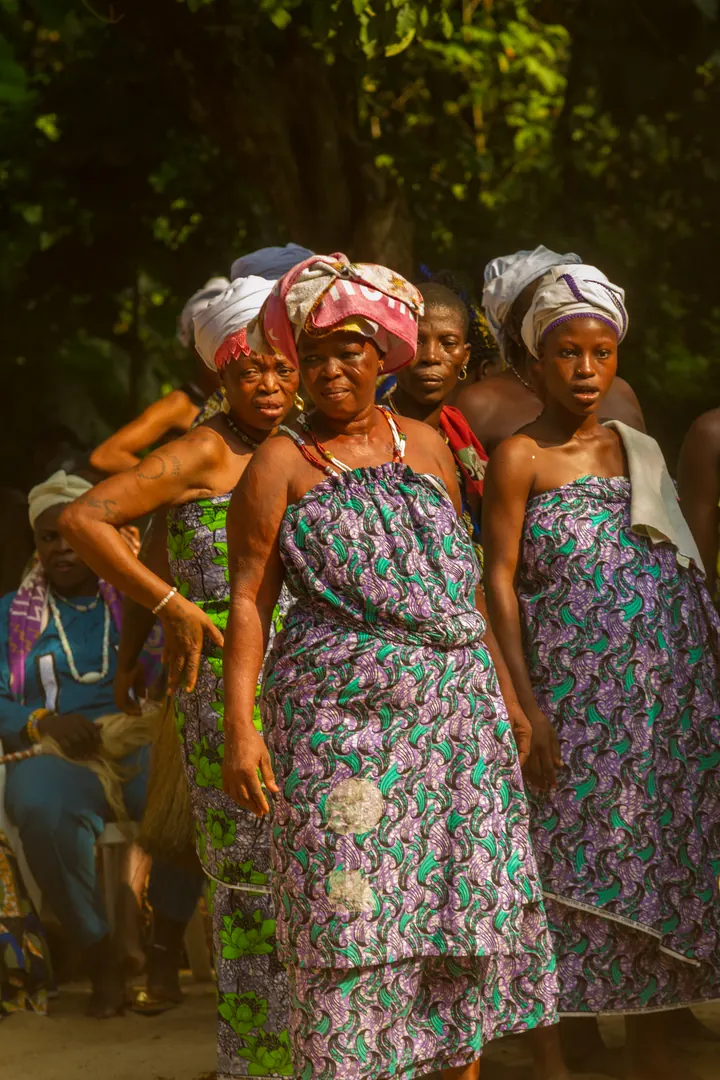
Wax cloth, and what to know before buying
Wax is sold by the pagne, a standard length, not by the metre. The patterns have names and sometimes meanings: some state a status, others a situation, and a few carry a message you would rather not wear unwittingly. Ask the name of the pattern before buying — the seller knows it and will happily explain.
On quality, one simple marker: on genuine wax the pattern goes through the cloth and the reverse is almost as crisp as the face. On a cheap print the reverse is pale. That is not a value judgement — both are worn — but it explains the price gap.
Which crafts are worth watching being made?
| Craft | Where | What you see |
|---|---|---|
| Lost-wax bronze | Southern Benin | The wax model, the clay mould, the pour |
| Wood carving | Kloto plateau, Kpalimé | The piece cut from a single block, no joins |
| Batik | Kpalimé region | The wax resists, the successive dye baths |
| Recycled glass beads | Coastal area | Crushed bottles, the kiln, the drawn bead |
Going to the workshop rather than the shop changes two things. You understand why a piece costs what it costs — a bronze pour takes days — and the money goes straight to the person who did the work.
The fetish market: a different matter
It appears on many itineraries, usually billed as a curiosity. It is not one. What is sold there are ritual ingredients — plants, powders, animal skulls and remains — intended for practitioners who know what they are buying. It is neither a show nor a souvenir shop.
You can visit, and it makes sense when someone explains what is used for what. Two rules apply: do not photograph without asking, and do not buy animal remains. Beyond the ethics, many involve protected species and taking them out of the country is illegal.
What can you actually bring home?
- Wax cloth: light, flat, unbreakable — the easiest thing to bring back
- Recycled glass beads, sold by the necklace or the strand
- A small bronze piece: heavy for its size, plan for hold luggage
- Coffee and cocoa from the Kloto plateau, bought from the grower
- Never: animal remains, or pieces presented as antique without written provenance
Frequently asked questions
If you ask, usually yes. Photographing stalls is generally fine; photographing people without their consent is not. At the fetish market, restraint is the rule: these are ritual objects, not scenery.
The surest way is to watch it being made. In a workshop you see the block of wood, the clay mould or the dye bath. On a stall, two clues: handmade pieces are never perfectly identical to each other, and the seller can tell you who made them.
Yes. Remains of protected species fall under the CITES convention and taking them out is illegal, however they were bought. Antique cultural property is also regulated. When in doubt we advise against it: the risk falls on you, at customs.
Next step
Ready to actually go?
Tony builds the itinerary around whatever made you want to go. Just tell him what stayed with you from this article.
Answer within 24h · No commitment